Cosmeceuticals & Skincare Science
SCS Awards 2025: Peptide Delivery and Oleogels Take Top Honors
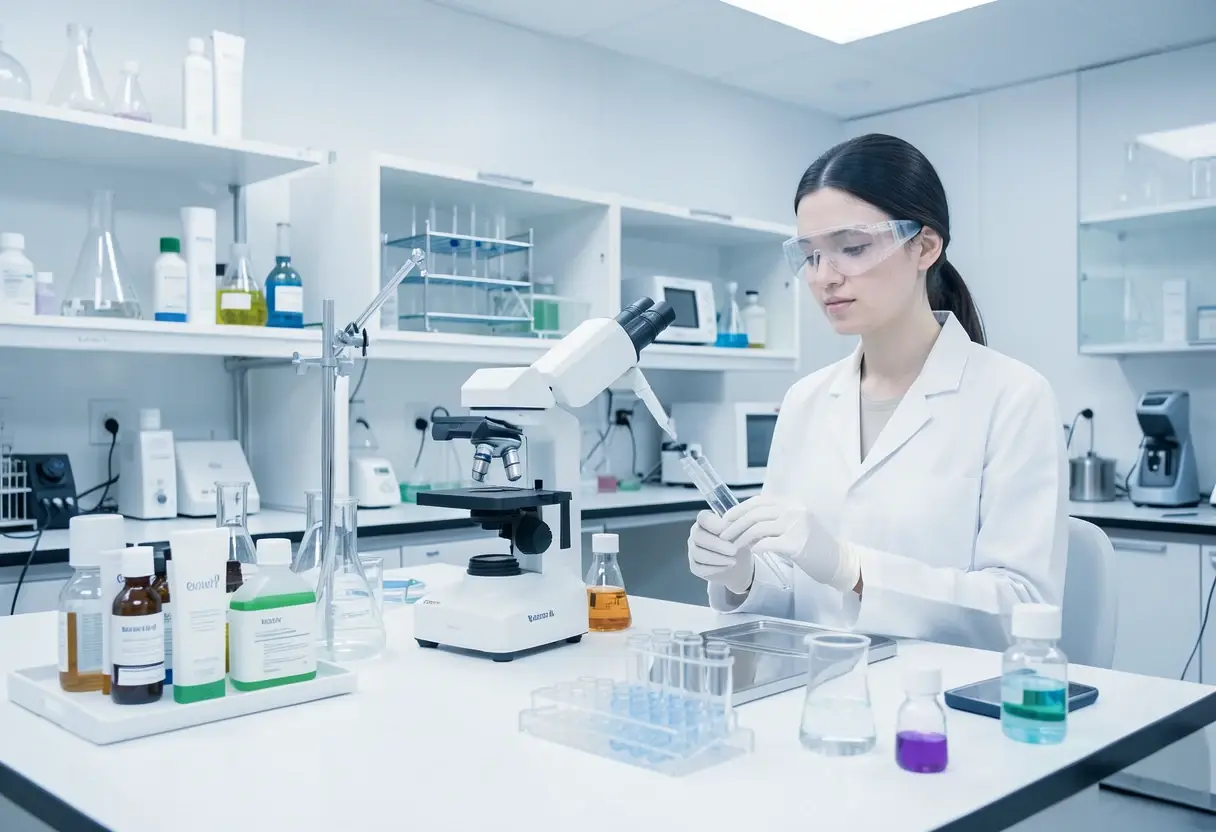
The Society of Cosmetic Scientists (SCS) introduced two new award categories this year, Spark and Catalyst, under its Cosmetic Science Achievement of the Year program, and the winning work spanned natural haircare ingredients, lower-energy manufacturing, responsible sourcing and peptide delivery. SCS President Astrid Bodard co-hosted the ceremony and presented the awards.
The expansion signals an institution trying to widen the aperture of what counts as achievement in cosmetic science. Whether the new categories meaningfully shift recognition toward earlier-career researchers, or simply add hardware to an existing program, will become clear only in subsequent editions.
Who won Contributor of the Year?
Emma Catchpole, Head of Formulation at No7 Beauty Company and SCS Honorary Education Secretary, received the Contributor of the Year award. The Society frames the prize as recognition for volunteers who donate time and expertise to advance the SCS and the wider field. Catchpole chairs the Education Committee, and the citation credits her leadership there as emblematic of how industry professionals develop others in the discipline.
The award honors service rather than a specific technical output. That distinction matters: no formulation, dataset or publication was cited, and the Society did not quantify the reach of her educational work.
What did the new achievement categories reward?
An industry judging panel selected the winners from peer nominations, colleague submissions and self-nominations. The SCS did not disclose the size of the entry pool or the scoring criteria, which limits how much weight the verdicts can bear.
The Spark Award, for early-career achievement, went to Michelle Effendy, Lead Application Scientist at Croda, for the Natural Esters & Oils hair performance programme. According to the Society, her work generated new technical evidence supporting the use of these ingredients in haircare formulations and opened opportunities in the natural haircare market. The SCS did not specify what that evidence measured — no performance endpoints, hair types or trial designs appear in the announcement.
The Catalyst Award went to Diogo Baltazar, Course Leader for the MSc Cosmetic Science at London College of Fashion, for research into ethylcellulose and castor oil oleogels (gels in which an oil, here castor oil, forms the continuous phase) as bases for cosmetic emulsions. His stated aim is twofold: reduce the energy required in manufacturing and cut product weight during distribution, all while retaining the textures and sensory properties consumers expect. The premise is commercially coherent — lighter products ship cheaper, and cooler processes burn less energy — but the announcement offers no quantified energy savings or sensory validation data.
How were the Laura Marshall Awards decided?
The Laura Marshall Awards use a two-round mechanism unusual for technical prizes. Industry experts judged the first round; the audience at the SCS Formulate exhibition voted in the second; the combined votes determined the winners in each category. Audience voting rewards demonstration-floor appeal as much as formulation rigor, a trade-off the Society has evidently accepted.
In Sustainability and Ethics, Ashland took first place with Moonlight Milky Serum. IMCD placed second with Sea Cycle, and Safic Alcan third with Boba Burst. The judges summarized the panel's feedback on Ashland's entry: "We were impressed by how this entry brought together regenerative agriculture, traceable local sourcing and a lightweight formulation that absorbed quickly and left skin feeling soft. It was a thoughtful example of how responsible sourcing can go hand in hand with a product people enjoy using."
Note what the citation contains: sourcing narrative plus sensory impressions. It names no active ingredient, no concentration and no evidence class — the formulation specifics that would let a formulator judge the work remain undisclosed.
In Technology and Disruption, Croda won with Adaptive Barrier Renewal Peptide Lotion, ahead of entries from Uniproma (PDRN Soothing Repair Cream) and Carst & Walker (Dual PDRN Bi-Phasic Cell Regenerator). PDRN (polydeoxyribonucleotide, a salmon-DNA-derived repair ingredient common in regenerative aesthetics) now appears twice in a single shortlist, a marker of where supplier R&D is heading. The judges said of Croda's entry: "What stood out to us was how this entry combined encapsulated peptides with a sophisticated emulsion that feels light on application and becomes more cushioning as it's worked into the skin. We also saw potential in using the formulation alongside technologies such as LED and microneedling."
Encapsulated peptide delivery paired with device combination claims is the substantive technical thread here. The judges flagged potential rather than demonstrated compatibility, and no data on peptide stability, penetration or device synergy accompanied the release.
What should readers take from the ceremony?
The 2025 SCS awards document an industry consolidating around three priorities: natural and responsibly sourced ingredients, manufacturing energy reduction, and peptide delivery systems designed to pair with energy-based devices. Each winning claim currently rests on judge impressions and category citation rather than published data. Whether these formulations generate the peer-reviewed evidence to match their trophies is the question the next announcement cycle should answer.
Source: Cosmetics Business
Amara Osei
Show full bio
Correspondent covering technology and product news in Clinical dermatology, inflammatory skin disease and biologics at Derm Field.