REMIND Trial: How Remibrutinib 25 mg Twice Daily Was Measured in CIndU
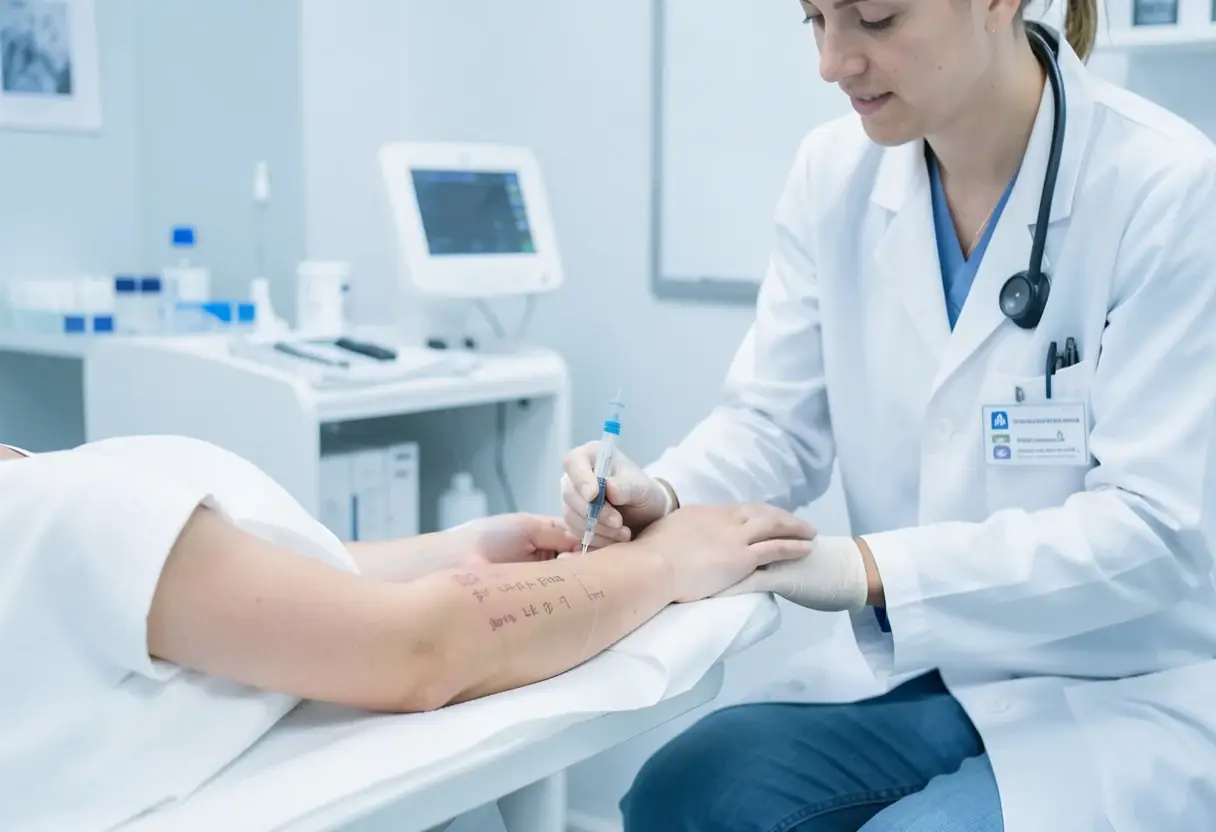
Remibrutinib 25 mg twice daily went head-to-head with placebo across three distinct chronic inducible urticaria subtypes in the Phase 3 REMIND program, with a primary endpoint readout at 12 weeks and follow-up stretching to a full year. That structure matters for anyone interpreting the results, because in CIndU the endpoint isn't a questionnaire — it's an objective, subtype-specific provocation test.
The design discussion comes from a panel segment titled "CIndU Phase 3 REMIND Study Design and Provocation Testing Endpoints," in which Dr. Dasilva walks through the protocol and Dr. Finklea, an investigator and author on the study, adds nuance.
Who got in, and on what terms
Investigators enrolled adults with CIndU for at least four months who were still symptomatic on background second-generation H1 antihistamines. Those antihistamines continued throughout the trial — so this was add-on therapy, not withdrawal of standard care.
The randomization ran one to one, remibrutinib versus placebo, separately for each subtype:
- Symptomatic dermatographism
- Cold urticaria
- Cholinergic urticaria
The primary endpoint hit at week 12. The placebo-controlled period ran to 24 weeks, after which placebo patients could switch to remibrutinib, with follow-up continuing to 52 weeks.
Dr. Dasilva flagged two design features worth internalizing. First, the cohorts are relatively small — a direct consequence of CIndU being a set of rare disease processes, not the massive populations a typical psoriasis or atopic dermatitis trial recruits. Second, the four-month disease-duration requirement diverges from chronic spontaneous urticaria, where shorter disease duration can qualify. That threshold is a deliberate gate.
How response was actually measured
This is where REMIND gets interesting for practitioners. Each subtype had its own objective provocation tool, and understanding the mechanics clarifies what a "complete response" really means.
FricTest (symptomatic dermatographism). A comb-like device with prongs of varying length dragged along the skin. Entry required wheals from at least three of four prongs plus an itch score of at least five after elicitation. Dr. Finklea noted the mean baseline FricTest score was about 3.5 — severe disease. A score of zero, she explained, represents complete clearance.
TempTest (cold urticaria). The device spans 4 to 44 degrees Celsius and works for heat or cold provocation. Cold urticaria patients needed a value of 15 to qualify for the trial.
Stationary bike (cholinergic urticaria). Exercise testing raised heart rate by 15 beats per minute every five minutes. The target was 90 beats above resting, held for 30 minutes, followed by a 30-minute wait. Timing matters here — Dr. Finklea explained that hives may appear after exercise stops, and cold urticaria often appears during rewarming, possibly as proteins change conformation and become autoallergens.
What does this change for clinicians?
If you treat inducible urticaria, REMIND's endpoints give you a template for objective monitoring that mirrors what happened in the trial. A FricTest score, a TempTest threshold, a structured exercise challenge — these are quantifiable, repeatable measures, not impressionistic itch reports. And the provocation-anchored entry criteria mean the enrolled population had documented, severe, provocation-responsive disease, with antihistamines already failing.
The small cohorts are the honest caveat. Rare subtypes mean narrower confidence intervals and less statistical room than a PASI-75-style psoriasis readout. Any interpretation of remibrutinib's effect size should carry that context.
The panel's next segment, "CIndU Patient Demographics: Disease Duration, Diagnostic Delay, and Quality of Life," will cover who was enrolled, how long they had suffered, and why diagnosis takes so long — useful reading for anyone whose CIndU patients waited years for a name for their condition.
Source: dermatologytimes.com
Sophie Lindqvist
Show full bio
Market editor covering people, launches and day-to-day practice in Clinical dermatology, inflammatory skin disease and biologics at Derm Field.