FDA Approves Remibrutinib as First Therapy for Symptomatic Dermographism
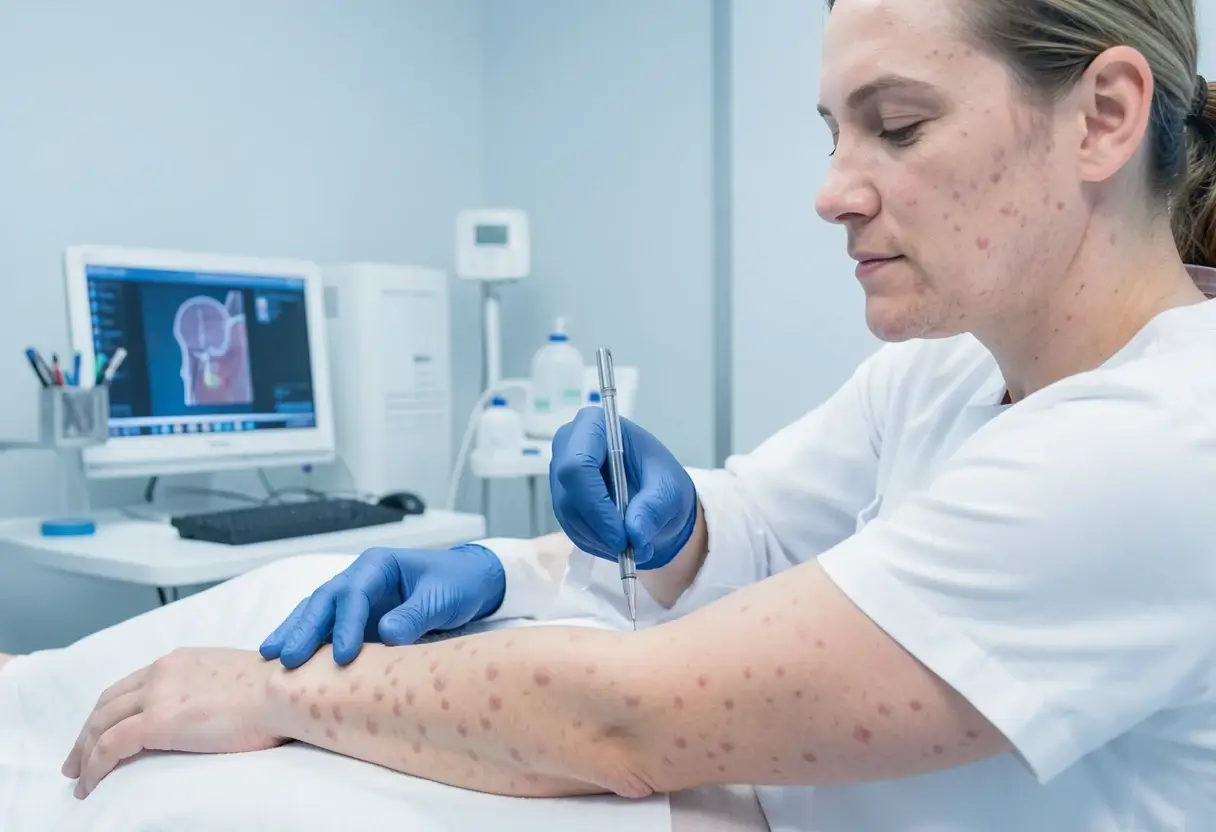
The FDA has approved remibrutinib (Rhapsido, Novartis) for adults with symptomatic dermographism inadequately controlled by H1 antihistamines — the first US-approved treatment for any chronic inducible urticaria. Novartis announced the decision on October 7, 2026, just over a year after the drug's first approval in chronic spontaneous urticaria (CSU).
The indication rests on hard numbers. In the phase 3 RemIND trial (NCT05976243), 29.3% of symptomatic dermographism patients achieved a complete response from hives at week 12, versus 14.0% on placebo (P = .0229). Novartis reported responses as early as week 2. The drug is now the only prescription therapy approved for both CSU and symptomatic dermographism when antihistamines alone fall short.
Why the approval matters clinically
Symptomatic dermographism is the most prevalent form of chronic inducible urticaria, and more than half of patients stay symptomatic despite antihistamine therapy, according to Novartis. Put simply: for every two patients on standard treatment, at least one still breaks out in hives.
The unmet need is broad. More than 90% of adults with chronic hives have either CSU or symptomatic dermographism. Remibrutinib now covers the two most common forms of the disease in a single prescription. Before this approval, options for symptomatic dermographism largely stopped at topical corticosteroids and oral antihistamines.
How the drug works and how it's given
Remibrutinib is a highly selective Bruton's tyrosine kinase inhibitor taken orally. It blocks the BTK pathway involved in histamine release — the key driver of wheals and swelling. Its activity in mast cells underlies its use across urticarial diseases.
Novartis says no routine laboratory monitoring is required, a practical advantage for dermatology practices managing long-term urticaria patients.
What did the pivotal trial look like?
The approval is based on the symptomatic dermographism cohort of the phase 3 RemIND trial, which enrolled patients who remained symptomatic on second-generation H1 antihistamines. Investigators compared remibrutinib with placebo. The primary efficacy measure was complete response from hives, assessed by the TotalFric score — a stroke-test-based instrument specific to dermographism.
RemIND also evaluated remibrutinib in other chronic inducible urticarias:
- Cold urticaria
- Cholinergic urticaria
Novartis plans to submit the full RemIND data set, including those cohorts, to health authorities globally where appropriate.
What is the safety profile?
Through week 24 of clinical trials, remibrutinib showed a consistent safety profile across symptomatic dermographism and CSU. The most common adverse events, each at an incidence of at least 3%, were:
- Nasopharyngitis (nasal congestion, sore throat, runny nose)
- Bleeding
- Headache
- Nausea
- Abdominal pain
Novartis reported no liver safety signals in the phase 3 REMODEL-1 (NCT05147220) and REMODEL-2 (NCT05156281) trials of remibrutinib in relapsing multiple sclerosis, consistent with the CSU experience. Those trials, which compared the drug with teriflunomide, showed clinically meaningful reductions in annualized relapse rate and delays in disability progression, with a favorable safety profile.
What evidence backed the earlier CSU approval?
The CSU indication rests on the phase 3 REMIX-1 (NCT05030311) and REMIX-2 (NCT05032157) trials. Remibrutinib reduced the weekly urticaria activity score (UAS7) versus placebo at week 12 in both studies:
- REMIX-1: least squares mean change of −20.0 vs −13.8
- REMIX-2: −19.4 vs −11.7
- P < .001 for both comparisons
The results were published in the New England Journal of Medicine by Metz and colleagues in 2025.
Where else is it approved, and what's next?
Beyond the US, remibrutinib is approved for CSU in the EU, the UK, and China. The pipeline extends past urticaria: Novartis is studying the drug in hidradenitis suppurativa and food allergy, positioning remibrutinib as a mast-cell-targeting platform rather than a single-indication asset.
With the full RemIND data set — including the cold and cholinergic urticaria cohorts — headed to regulators worldwide, dermatologists can expect the drug's footprint across inducible urticarias and possibly beyond to keep expanding.
Original: novartis.com
Daniel Okafor
Show full bio
Staff writer covering people, launches and day-to-day practice in Clinical dermatology, inflammatory skin disease and biologics at Derm Field.