Citi Keeps $80 Target as It Questions Moderna Melanoma Vaccine
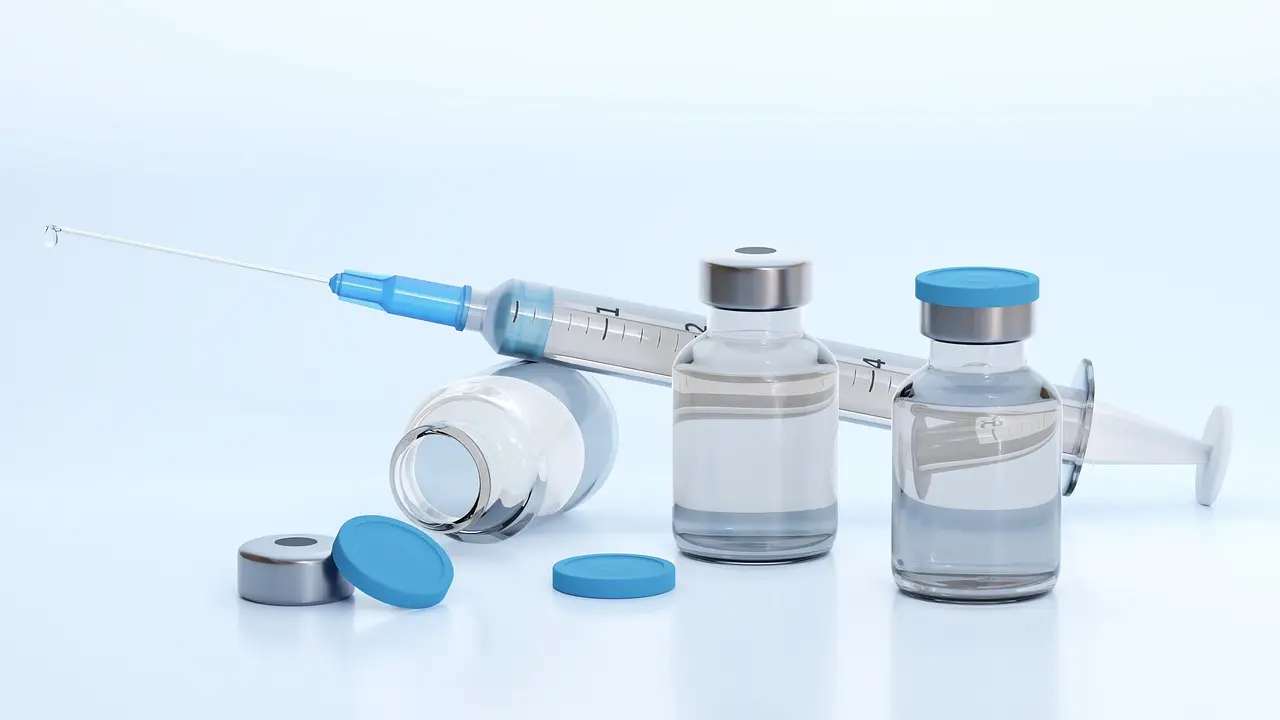
Citi kept Moderna (MRNA) at Sell with an $80 price target—more than 60% below current levels—as analysts debated whether an individualized melanoma vaccine’s clinical benefit justified tumor harvesting and bespoke manufacturing.
The Phase 3 INTerpath-001 study evaluated Moderna’s individualized neoantigen vaccine in patients with melanoma; TD Cowen’s review of the leaked data put distant metastasis-free survival at a hazard ratio of 0.62.
Citi analyst Meacham called the outcome a “clinically meaningful advance” while asking whether its benefit justified the individualized workflow. Meacham also said some investors were assigning value to an effective-cure narrative and success across additional solid tumors.
The signal behind the Phase 3 readout
The data leaked ahead of Moderna’s scheduled presentation at the European Society for Medical Oncology (ESMO) Congress.
- TD Cowen: Analyst Tyler Van Buren called the leaked Phase 3 result compelling and within the exceptional range cited by key opinion leaders. He nevertheless said the distant metastasis-free survival hazard ratio of 0.62 fell below elevated expectations. TD Cowen retained Hold with a $90 target.
- Bernstein: The firm described the results as a strong Phase 3 result and meaningful validation of Moderna’s individualized neoantigen platform, but interpreted the share-price decline as a sell-the-news event. Bernstein retained Market Perform with a $45 target.
- Wells Fargo: The firm said recurrence-free survival data exceeded investor expectations, while overall-survival data were not yet mature. Its Overweight rating applied to Merck, not Moderna, and carried a $165 target.
The report did not supply the complete ESMO presentation, trial size, follow-up, subgroup detail or safety outcomes. Those gaps leave the breadth, durability and clinical meaning of the 0.62 result for the formal presentation to resolve.
Manufacturing remains the commercial fault line
INTerpath-001 makes melanoma treatment a workflow question as well as an efficacy question. Treatment depends on harvesting tumor material and manufacturing an individualized vaccine; Citi asked whether the benefit can bear that customization.
The report supplied no turnaround time, manufacturing yield, failure rate or cost. The objection therefore remains an analyst judgment, not a trial finding.
Investors split sharply on the value
MRNA shares plunged nearly 18% Thursday to $202.63, their steepest one-day fall in more than two months, then traded 4% to 5% lower in Friday premarket trading. The stock was heading for its worst week in three months; Mizuho’s Jared Holz warned that extreme volatility had made MRNA unsuitable for many investors.
Yet MRNA had gained more than 553% year to date, compared with more than 37% for Merck, which traded marginally lower in premarket trading. Among 23 analysts, 14 rated MRNA Hold, five Buy or Strong Buy, and four Sell or Strong Sell. MRNA remained a trending Stocktwits ticker.
Retail sentiment toward MRNA turned neutral over 24 hours amid extremely high message volume; Merck sentiment turned bullish with high volume. One Stocktwits user called Thursday’s reaction an oversold sell-the-news move, while another predicted MRNA would run hard. Those posts describe crowd positioning, not clinical evidence.
Evaxion reports three-year Phase 2 melanoma data
Evaxion (EVAX) shares jumped more than 8% in Friday premarket trading after the company reported three-year results from a Phase 2 trial of its individualized cancer vaccine, EVX-01, in advanced melanoma.
- Cohort: The trial enrolled 16 patients. Every patient mounted an immune response, and 89% of the vaccine’s targets activated specific T-cell responses.
- Initial two years: Patients received EVX-01 with Merck’s cancer drug Keytruda, and 75% had tumors shrink or disappear.
- Extension: Six patients continued for one year and received EVX-01 alone. All six maintained their earlier responses, with no signs of cancer progression during the third year.
“What makes these three-year findings particularly compelling is not only the durability of clinical responses, but also the sustained strength and breadth of vaccine-induced T-cell immunity,” trial investigator Muhammad Adnan Khattak said.
Evaxion will present the data in a poster on October 24 at the ESMO Congress. Its pipeline also includes EVX-04 for acute myeloid leukemia, EVX-05 for glioblastoma, and vaccines targeting gonorrhea and cytomegalovirus.
The company had $14 million in cash on June 30, down from $18.4 million at the end of March. It expects those reserves to fund operations well into the second half of 2027.
EVAX had gained more than 41% for the week and was tracking its largest weekly gain in more than 21 months, although the stock remained down more than 21% in 2026. Retail sentiment was extremely bullish amid extremely high message volume. One user said Evaxion needed a partnership to enter Phase 3; another said it could disrupt oncology. Those are investor claims, not trial endpoints.
What does this change for melanoma care?
No immediate prescribing change follows from these reports. Moderna’s data had not yet been formally presented, and EVX-01 remains an investigational Phase 2 program.
For clinicians, the practical answer is cautious: Moderna’s 0.62 hazard ratio deserves attention, but overall-survival data remain immature and manufacturing metrics are absent. EVX-01’s 16-patient result is encouraging, but only six patients contributed a third year of monotherapy follow-up. The forward checkpoints are the full ESMO presentation for Moderna, especially survival maturity and manufacturing feasibility, plus the October 24 EVX-01 poster and longer follow-up.
Source: Google News: Melanoma
Sophie Lindqvist
Show full bio
Market editor covering people, launches and day-to-day practice in Clinical dermatology, inflammatory skin disease and biologics at Derm Field.