L’Oréal to invest €300 million in French plants and labs
By Daniel Okafor
L’Oréal will invest nearly €300 million in France between 2027 and 2029, directing the money toward factory modernization, stronger research and innovation, and operational growth. The average would be roughly €100 million a year if spending were spread evenly.
France is already L’Oréal’s third-largest market, with more than 15,700 employees and 1,000 local suppliers. Those suppliers range from plants and agricultural raw-material producers for perfumery to packaging manufacturers and biotechnology companies. The group estimates that the network supports nearly 100,000 direct, indirect and induced jobs in France.
More than one-quarter of L’Oréal’s global production occurs in France across 11 local factories. In 2025, across all industries, L’Oréal was among the companies filing the highest numbers of patents in France, according to the French National Institute of Industrial Property, or INPI.
Nicolas Hieronimus, CEO of L’Oréal Groupe, said: “France, the birthplace of our group, is an essential pillar, with teams and industrial and scientific sites at the forefront of our sector.”
He added: “We plan to invest nearly €300m there between 2027 and 2029, reaffirming our confidence in the future of industry and research in France and our determination to strengthen our long-term presence there.” Hieronimus tied the group’s global position to the expertise and ability to innovate of its workforce.
France is not simply a sales market for L’Oréal; it is a core industrial and research base.
What does the €300 million fund?
L’Oréal describes three linked priorities: the environmental transition of manufacturing sites, stronger research and innovation capabilities, and further operational development. It presents the program as an economic contribution to France.
- Environmental transition: improving water reuse and optimizing energy use at manufacturing sites.
- Research and innovation: modernizing the Advanced Research and Applied Research laboratories with AI and new scientific equipment.
- Operations: expanding manufacturing and storage capacity at the Gauchy factory in Aisne.
One project already has a near-term milestone. The company’s Ormes factory will inaugurate a water-treatment plant this year.
The capital plan links expansion with modernization rather than treating new capacity as a stand-alone goal.
How will laboratory technology change?
France hosts seven L’Oréal research centres. The planned investment will modernize the group’s Advanced Research and Applied Research laboratories through more AI and new scientific equipment.
- Chevilly-Larue, Val-de-Marne: automated microscopy analysis systems.
- Saint-Ouen, Seine-Saint-Denis: next-generation robots for weighing powdered ingredients.
- Lyon, Rhône: advanced imaging to measure active-ingredient performance across all layers of skin.
The Lyon system is intended to measure ingredient performance across skin layers. The announcement reports laboratory capability, not clinical trial endpoints or patient outcomes.
Barbara Lavernos, deputy CEO in charge of research, innovation and technology, said: “Science has been the beating heart of L’Oréal since the group was founded nearly 120 years ago.”
She said France’s seven research centres are a historic and strategic pillar of the company’s innovation capabilities. The investments should help teams explore new scientific frontiers and create products for consumers worldwide.
For skin science, the immediate gain is measurement and development capacity, not demonstrated clinical benefit.
What will change at the Gauchy factory?
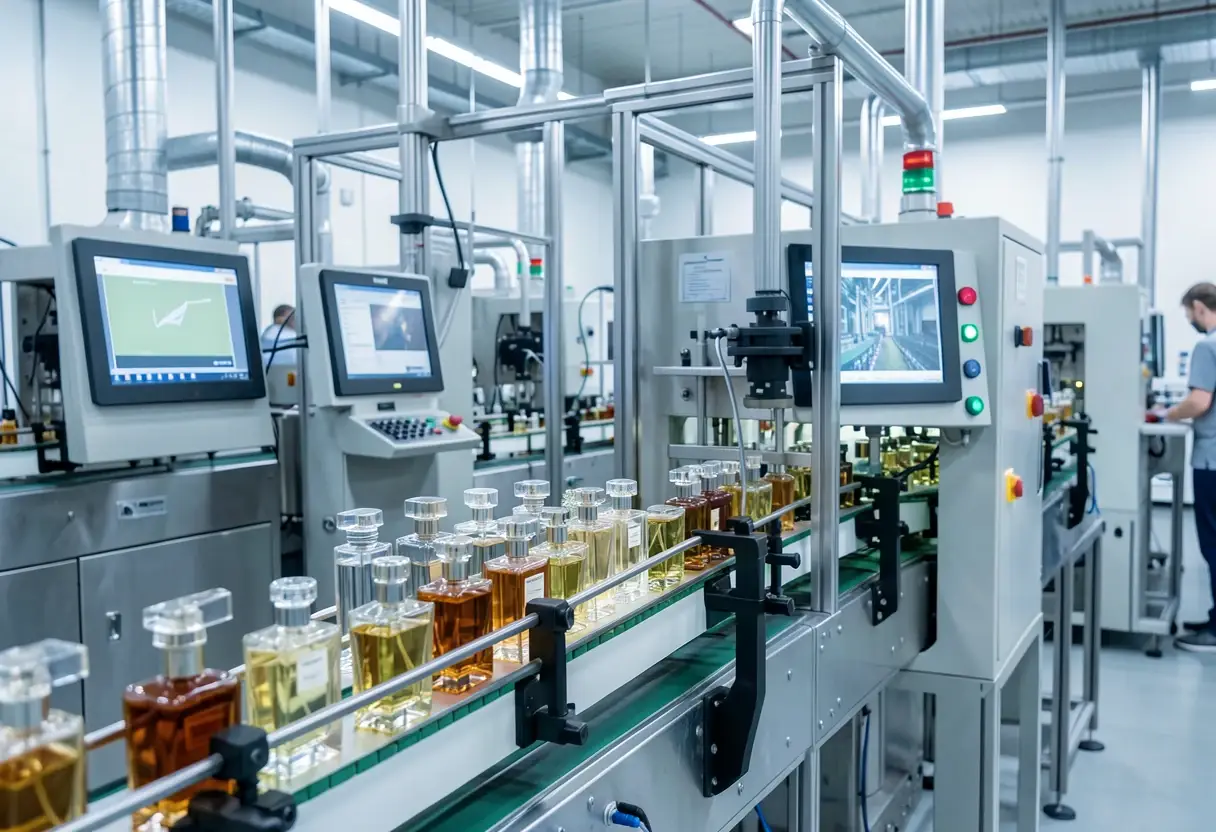
At the Gauchy factory in Aisne, the 2027-2029 investment will fund four new production lines, a manufacturing unit and storage tanks. Yves Saint Laurent and Lancôme fragrances are among the products manufactured there.
The new equipment should let the site accommodate additional brands and support growth for Armani, Lancôme and Yves Saint Laurent.
The Gauchy project is designed to add both capacity and flexibility for the company’s fragrance portfolio.
How will water and energy goals change?
L’Oréal calls preserving water resources a strategic priority. By the end of 2025, 56% of the water used for industrial purposes at its factories worldwide came from reused or recycled sources. The group targets 100% reused or recycled water for industrial purposes at its factories by 2030.
It also says it has already achieved 100% renewable energy across its sites and stores worldwide. L’Oréal will continue optimizing energy use, although the announcement sets no new energy deadline.
Chief Operating Officer Antoine Vanlaeys said the industrial investment supports L’Oréal’s performance and future. He described the “Made in France” label as an asset built on team expertise and the group’s 11 French industrial sites.
He also pointed to the Ormes water-treatment plant, which will open this year, as evidence that industrial performance and environmental ambition can advance together.
Water has a dated 2030 target; renewable energy already has a completed 100% milestone.
What should readers watch next?
L’Oréal will inaugurate the Ormes water-treatment plant this year. The laboratory upgrades and Gauchy additions must follow during 2027-2029. The announcement offers operational targets, not clinical evidence, so implementation will determine whether the investment strengthens product development and manufacturing performance.
For now, the measurable milestones are plant opening, laboratory commissioning and four additional production lines.
Source: Cosmetics Business
Daniel Okafor
Show full bio
Staff writer covering people, launches and day-to-day practice in Clinical dermatology, inflammatory skin disease and biologics at Derm Field.