California to ban 30 more cosmetic ingredients from 1 January 2027
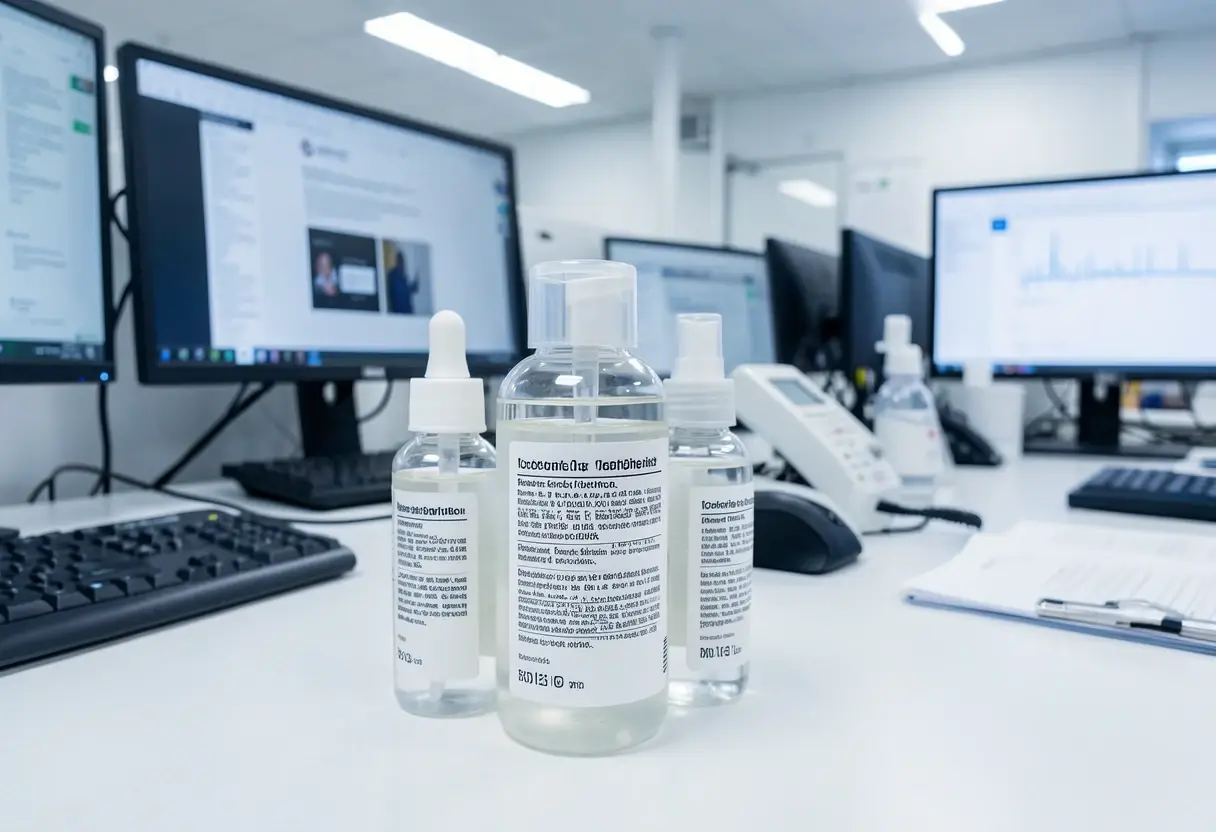
On 1 January 2027, California's list of banned cosmetic ingredients grows by 30 entries covering 45 named substances — and the law gives brands no sell-through period for finished goods already sitting in the state.
An estimated 26 of the new entries come from Assembly Bill 496, the cosmetic safety bill signed in 2023 that bans additional intentionally added chemicals in products sold or manufactured in California. The remaining four nitro musks come from AB 60, the Musk Reduction Act. One AB 496 entry alone covers 16 boron compounds, which is why 30 entries translate into 45 named substances.
The first list — 11 ingredients plus 13 PFAS compounds — has been in effect since 1 January 2025.
Which ingredients are on the 2027 list?
The new entries reach into everyday formulas:
- Lily aldehyde, the fragrance ingredient known in Europe as butylphenyl methylpropional, or lilial
- Cyclotetrasiloxane, known as D4
- Styrene, vinyl acetate and acetaldehyde
- Boric acid and borates, effective from 1 January 2027
- A set of dyes most founders have never had to think about
Natalie Vauli, founder of Vaulabs, a contract manufacturer in Clearwater, Florida that produces skin, hair and body care in runs starting at 5,000 units per SKU, says founders call with the same question whenever a ban lands: can we still make my product? Her answer: the ban itself is rarely the hard part.
What does a manufacturer check first?
Vauli's team audits the full formula against the whole California list — old entries and new — using the INCI list on the back of the pack, not the marketing story.
Two ingredients are the quiet ones. Boric acid arrives as a pH buffer or part of a preservative system. D4 can turn up in volatile silicone blends, and where it is part of the formula rather than a trace, it needs a real replacement.
Founders are often surprised to find a banned ingredient hiding in a fragrance compound, preservative booster or raw material bought under a trade name, she notes.
The second step is written confirmation from suppliers. A certificate of analysis tells you what was tested, but not what was intentionally added upstream — and the law targets intentional additions. A technically unavoidable trace from impurity, process, storage or packaging does not put a product in violation, but only when the product was made through processes intended to comply. That exception protects no one who cannot show where the trace came from. If a supplier cannot answer, Vaulabs will not build a launch on their material.
How risky is a rushed reformulation?
Vauli treats reformulation as a new product, because it is one. Swapping an ingredient changes how the formula behaves; a preservative system that worked with the old ingredient may not protect the new one. Every change requires stability, packaging-compatibility and performance testing.
"A rushed reformulation is usually a skipped stability test with a nicer name," she writes. She has seen founders try to save six weeks on testing and lose six months to a product that separates on the shelf — a clogged pump or a cream that turns grainy in a warm warehouse.
Inventory counts too. The ban covers anyone who manufactures, sells, delivers, holds or offers the product for sale in California, so finished goods in a California warehouse count, not only new production. Making more of a formula you cannot sell in your largest market is, in her words, the most expensive mistake on the list.
Claims also need a check: when an ingredient disappears, the front-of-pack story has to stay true. "Customers forgive a reformulation. They do not forgive discovering it from a third-party," Vauli says. One client recently asked Vaulabs to match a well-known professional face scrub whose benchmark list was built on PEGs and mineral oil; the company agreed to match the glide, polish and result — not those ingredients — and the "clean" version goes through full stability testing before shipping.
What else changes in 2027?
Washington state restricts 25 formaldehyde releasers in cosmetics from the same date, 1 January 2027, though in-state retailers get a year to sell existing stock. A formula built to the strictest standards you sell into, Vauli argues, is one you never have to rebuild when the next state moves.
Her closing advice to founders selling in California: pull INCI lists this week, ask suppliers the direct question, and sort products into reformulate, paperwork-check or discontinue. Five weeks is enough time to do this well — it is not enough time to do it twice.
Source: Cosmetics Business
Olivia Hart
Show full bio
News editor covering technology and product news in Clinical dermatology, inflammatory skin disease and biologics at Derm Field.