Allergy's Origin May Sit in Mitochondria, Not Immune Cells
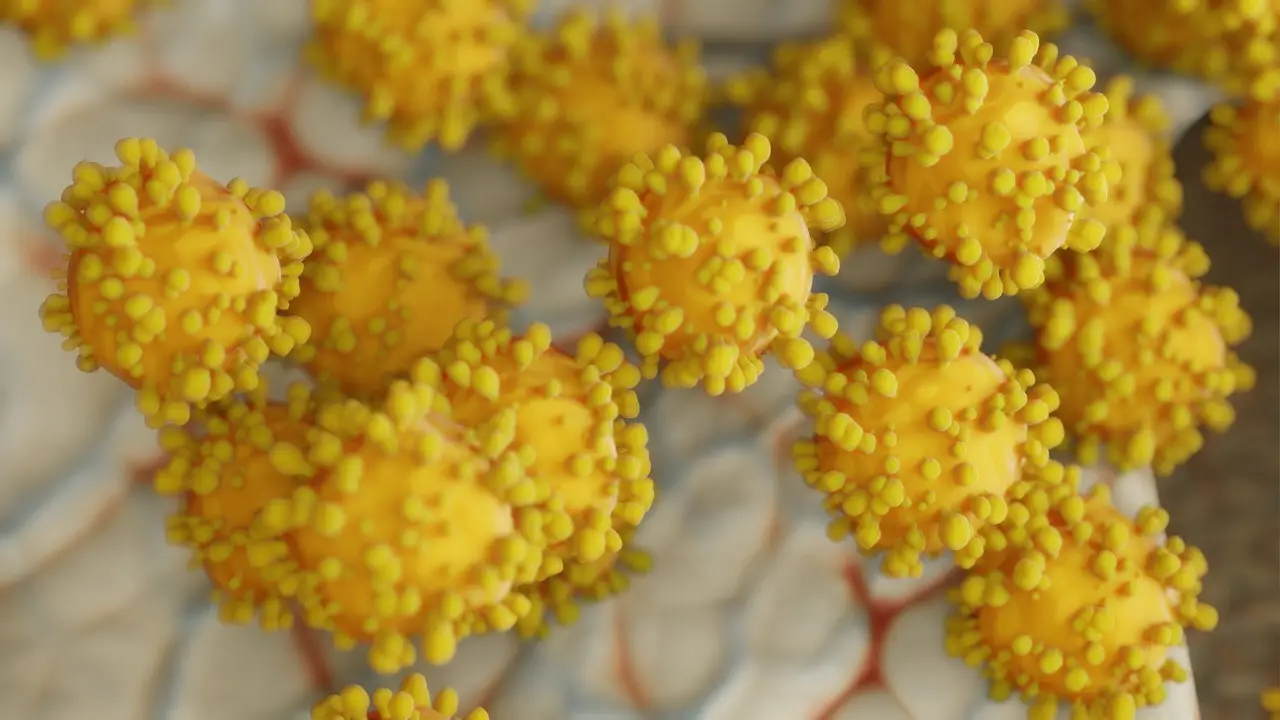
Genes that clear damaged mitochondria ran at abnormally low levels in all 13 patient groups with eosinophilic esophagitis — the single strongest signal in a new hypothesis paper arguing that allergies may begin as an energy failure inside barrier cells, not as a immune-system mistake.
The review, published in the journal Allergy (2026; DOI: 10.1111/all.70532) by a 10-author international team led by clinical immunologist Peter K. Smith of Griffith University, Australia, proposes an "outside-in, bioenergetic" model of allergic disease. In it, cells lining the skin, esophagus, nose and airways lose the ability to protect their own mitochondria; the barrier weakens, and the immune system joins in afterward.
What did the study actually measure?
No patients were recruited. The team mined 116 patient-versus-control comparisons from earlier deposited datasets, covering 3,776 patients and 2,164 controls, with tissue from skin, esophagus, nose, airways and blood. Psoriasis and COPD samples served as non-allergic comparators.
Of 212 comparisons tested, only nine survived a standard false-positive safeguard:
- Two merely confirmed the expected immune reaction was present
- Five involved how esophageal cells handle energy
- Two involved an internal alarm system — genes STING1 and MAVS — that reacts to stray genetic material, such as mitochondrial DNA escaping into a cell's interior (something the study inferred, not measured)
Ranked by the two alarm-system genes, esophagus, eczema skin and hay-fever nasal lining scored above psoriasis, asthma and COPD — but only the esophagus result passed the statistical safeguard, and the comparison covered tissue types, not individual patients.
One striking finding came from eczema patients' visually normal, non-inflamed skin: barrier-building and antioxidant genes were lower than in healthy skin, while a gene blocking those defenses was higher. Pooled across nine sample sets, the pattern pointed the same way without reaching statistical significance.
Why the timing matters
Allergic disease has risen too fast for genes alone to explain; food allergy now affects roughly one child in 20 in industrialized countries. The paper cites an earlier study showing babies with leakier skin at 3 months had more than 3.5 times the odds of early allergy signs by 6 months — evidence, the authors argue, that barrier dysfunction precedes the immune response.
The relapse pattern adds weight. Stop an effective immune-blocking drug for asthma or chronic sinus disease with nasal polyps, and symptoms often return within months. In the authors' framing, that's because nearly every approved therapy works downstream, calming immunity without fixing the proposed cellular fault.
Smith said: "We have spent our careers managing the smoke and for the first time we think we can see the fire, and it is not where everyone was looking." The next step, he added, is "to measure these cells directly in infants before the allergy develops."
Where the pattern breaks down
The hypothesis does not fit every condition. The mitochondrial signature was missing in nasal polyps and established adult asthma, appeared only conditionally in hay fever, and was weakest for food allergy, whose datasets came only from blood. The same patterns also surfaced in psoriasis and COPD, suggesting they may reflect chronic tissue damage generally rather than allergy specifically.
The authors also note that standard DNA-testing chips barely cover mitochondrial DNA, and no large genetic study in three decades has linked it to allergy. As they put it: "The targets were not absent. They were unmeasured."
What are the caveats?
Plenty. This is a hypothesis-generating review, not a trial. Most tissue samples were already inflamed, so the data cannot establish whether energy problems caused disease or resulted from it. Broad mitochondrial suppression across allergic tissues was not supported. And the data were analyzed with a purpose-built large-language-model workflow, though the gene list and scoring rules were set before any dataset was seen.
Several authors disclosed industry ties: Smith reports GSK and Sanofi funding, speaker fees, and a provisional patent on diagnosis and treatment based on the proposed fault; David Price discloses ties to AstraZeneca, GSK, Novartis and others. Funding was listed as none, and the paper is open access. Cezmi A. Akdis is Allergy's editor-in-chief.
What does this change for patients today? Nothing yet — but if infant studies confirm the sequence, the field's therapeutic target could shift from suppressing immunity to protecting mitochondria.
Source: studyfinds.com
Olivia Hart
Show full bio
News editor covering technology and product news in Clinical dermatology, inflammatory skin disease and biologics at Derm Field.